

Four years ago this month, my wife and I were driving from Nashville to New York with our two elderly dogs in the back seat. The reason for the trip: to meet our new nephew, who was due in a matter of days. I had also just been let go by the Washington Post and launched the newsletter you’re reading now.
I was pretty worried about whether I’d be able to continue to work as a journalist. I really had no idea how many people would be willing to pay a monthly fee to read my work. So as we ticked off the miles during the 14-hour drive, we obsessively hit refresh on the subscription page. By the time we got to D.C., I had enough paid subscribers to ensure that I could continue my work. I was immensely grateful and humbled by that. And we could exhale.
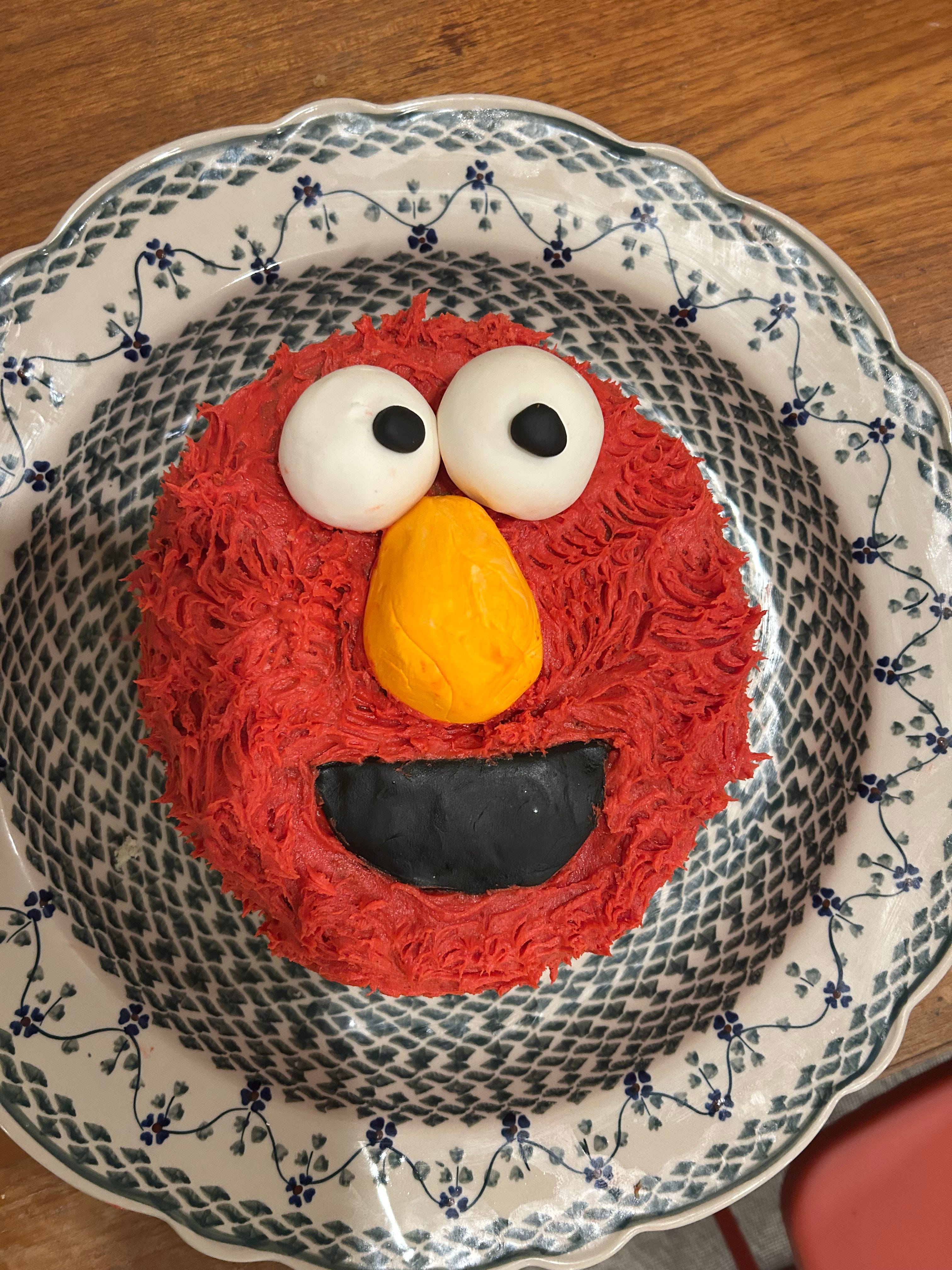
Four years later, we lost those two senior pups and now have two rambunctious rescues. We’re also now headed back to Nashville from New York, after celebrating our nephew’s fourth birthday. We made him an Elmo cake:
It’s been gratifying to be able to continue my journalism thanks to the support and generosity of my paid subscribers. So thank you. And for those of you who are not able to pay for a subscription but still read and help me promote my writing, a warm thank you to you as well. I quite literally don’t know what I’d be doing without all of you.
But the nature of these newsletters means that things tend to plateau. You lose 10 percent or so of your subscribers each year to churn alone. I had initially hoped to get enough paid subscriptions to hire an editor, at least on a contractual basis. I haven’t been able to do that just yet. Part of the problem is that I tend to write long pieces that either require a lot of reporting, a lot of research, or both. Newsletter subscriptions tend to run hot on shorter, quick turnaround content. But if you’re reading this, it means you value original reporting.
So for now, The Watch remains a family affair. My wife, Liliana Segura, is my editor for my longer work. She’s a thoughtful and careful editor and makes what I write immeasurably better. But she, too, is an investigative journalist. She edits me in her off time, which is time she could be clearing her head with more rejuvenating activities, like playing with our dogs.
I’m not great at asking for money, nor do I enjoy tooting my own horn. Unfortunately, both are necessary to continue making a living this way. So consider this an appeal to those of you who read regularly, but haven’t yet sprung for a paid subscription. I could really use your support!
And, of course, in addition to being my main source of income, your paid subscriptions are also why I can do on-the-ground reporting.
You can subscribe here. That page also has links to Venmo and PayPal, in case you’re uncomfortable with supporting my work through Substack.
In my effort to nudge you, here’s a quick summary of the work I’ve done that has had a real-world impact.
As many of you might recall, my first long investigation on this site looked into the wrongful conviction of Charlie Vaughn and the role of the Antiterrorism and Effective Death Penalty Act in keeping him in prison. The piece won a Silver Gavel Award from the American Bar Association, and also generated more legal help for Charlie’s legal defense.
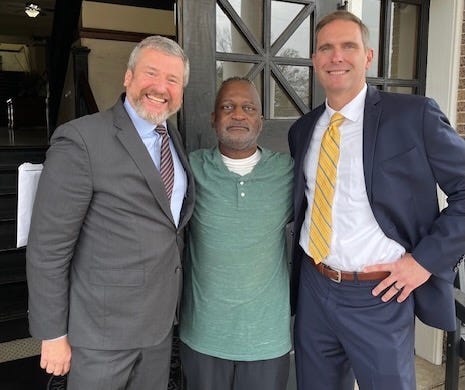
This past January, Charlie was finally released from prison, after more than 35 years.
Here’s what Stuart Chanen, Charlie’s lawyer said about my work in a LinkedIn post:
Two magnificent journalists kept Charlie’s story alive. First, Radley Balko, formerly of The Washington Post, and now writing his own blog, The Watch, is the leading writer in the U.S. about the militarization of police and other issues related to excessive force and police misconduct. Radley has written twice about Charlie’s case. The first, which had the provocative title, "The Maddening Irrelevance of Charlie Vaughn's Innocence," won the ABA's Silver Gavel Award, and is posted here. Friday, after Charlie's release, Radley wrote this. Second, Mike Masterson of The Arkansas Democratic Gazette, wrote extensively about Tina, John, and Charlie's ordeal, including shortly after Governor Sanders had denied Charlie's request for clemency. Radley and Mike were among my very first calls when I learned Charlie would be released, and I was extremely sad to learn that Mike had passed away in May from a long battle with skin cancer. I am told that Mike was a journalist’s journalist, and I’ll make sure his loved ones know the impact he had on Charlie’s case.
Stuart also sent me this kind note after Charlie’s release:
Your piece on AEDPA and Charlie is still the best piece of legal writing by a journalist I have ever read.
In the fall of 2024, I wrote a three-part series on the political right’s efforts to rehabilitate Derek Chauvin and rewrite the history of George Floyd’s murder through propaganda like the “documentary” The Fall of Minneapolis.
My goal with that series was to provide a thorough resource for people to use to push back against the false claims.
Every few months, some MAGA influencer or far-right pundit again starts calling for Chauvin to be pardoned, and I frequently see people reply with a link to that series. So it’s nice to see that work serving its purpose.
During the 2024 presidential campaign, it became clear that if Trump won, immigration would become a critical issue. The mass deportations Trump was promising would be one of the largest forced migrations in history. So I started educating myself about immigration law, deportations, and enforcement.
That resulted in this piece laying out the logistics, manpower, and money it would take to deport millions of people, and what it would mean for the lives of the deported.
Michael Tomasky, editor of the New Republic wrote this kind praise for the piece:
But the single best article about this, by far? It was by the criminal-justice journalist Radley Balko on his Substack, also in May. It must have been 10,000 words long, maybe more, and it was absolutely harrowing—the details about the size of the army that would be needed to round people up, the number of buses and airplanes involved, the size of the camps that would have to be built, and much more.
Balko has a reputation and a following. But he isn’t The New York Times, The Washington Post, the AP, or a network news channel. None of our major outlets come up with coverage that equals the effort that this one Substacker (who was actually on the staff of The Washington Post until October 2022) managed to provide on the topic.
My work on immigration also resulted in an interview with Ezra Klein that was praised and promoted by Barack Obama, as well as a cover story in The New Republic and two op-eds in the New York Times.
My interview with Clay Jackson, an attorney who was harassed by federal officers then fired from his job for providing legal assistance to an immigrant family also brought this nice praise from the Columbia Journalism Review:
Much of the best reporting on the impact of Trump’s immigration policies has come from independent reporters. Add Radley Balko, Judd Legum, and Rebecca Crosby to that list. Last week, Balko told the story of Clay Jackson, a Texas lawyer who heard that a local immigrant family needed legal help. Jackson went to the family’s home, advised them of their rights, and offered assistance with getting pro bono counsel, since immigration law is outside his wheelhouse. A few days later, two men showed up at Jackson’s door. Neither showed a badge, but they told him they had “information that you are obstructing an ongoing immigration investigation.” His Wi-Fi had also been mysteriously interrupted during the visit, rendering his door camera useless.
About six weeks later, on April 23, Balko’s story ran. Later that same day, according to Legum and Crosby, Jackson was fired from his job as an attorney at a Fortune 500 insurance company, Fidelity National Financial. The company cited “unsatisfactory performance and violations of company policy.” It didn’t respond to a request for comment.
You can read Clay’s newsletter here.
Last year, I also reported on the wrongful accusations against Jordan Silverman, a Maryland man who was put through hell when a group of parents accused him of molesting their children at a daycare facility in Washington, D.C. That story took a couple of years to fully report.
After I published it, Silverman was able to start reclaiming his name and reputation. A Go Fund Me raised several thousand dollars for him — not enough to really put a dent in the massive debt he accumulated for his legal defense, but still not nothing. But more importantly, the piece also prompted some of the folks who had been demanding his criminal prosecution and were leading the attacks on him to reconsider, and even to apologize to him.
My piece of course couldn’t undo the damage done to Jordan’s life, but it did at least provide a counternarrative to the sensationalist, one-sided coverage that turned up any time someone did a search on his name.
Here’s what Bill Grueskin wrote about my story, again in the Columbia Journalism Review:
Silverman opened up about his case to Radley Balko, an independent journalist who published a remarkably detailed and candid account on his Substack. It is not an easy read, given the nature of the allegations and the length of the story—around thirteen thousand words. But it fills in a lot of gaps that you won’t find in other reporting, including a credulous piece at the Daily Beast. Balko correctly characterizes some of the media’s coverage as “sensationalist,” “conspiratorial,” and failing to “entertain the possibility that Silverman might be innocent.”
Balko spent more than two years digging into files and clips and interviewing witnesses, experts, and, most important, Silverman himself. Set aside some time to read it. You’ll be saddened, but you won’t be sorry.
I’m also proud of the two-parter I published on how MAGA-adjacent media outlets like The Free Press were falsely portraying Trump’s cruel and inhumane treatment of immigrant children as a heroic attempt to “save” them from sex trafficking.
Since I published those pieces, the Trump administration has only doubled down on the cruelty. They’re intentionally separating immigrant children from their families, refusing to provide them with adequate legal representation as required by law, holding them for long stretches under horrific and decrepit conditions, and deporting them without due process. And they’re doing all of that at a record rate.
I’m hoping to put up Part Three of my series on the wrongful conviction of Chris Duncan in the next week or so. It’s been delayed mostly because of the new developments in the case — basically prosecutors continuing to harass Duncan and the other people involved in the case.
My past reporting on Duncan’s case played a direct role in his exoneration and release. That work was published more than 15 years ago. But my hope with my series here at The Watch is to provide a record of this atrocity, and perhaps to spur some action on behalf of the people wrongly convicted by Steven Hayne and Michael West who are still in prison.
Here are some kind and things others have said about this site—and about my work more generally:
“Radley is one of the best criminal justice reporters in America and has been an influential voice on how to reform everything from policing to junk forensic science.”-
— Pamela Colloff, ProPublica and the NY Times Magazine
“Truly one of the absolute best reporters —*on any topic* — we have.”
-- Chris Hayes, MS Now
“The man has produced tremendous work with as much impact as anyone in the field.”
-- James Downie, MS Now opinion editor and former Washington Post editor
“ . . . a model for journalists who cover criminal justice issues.”
-- Rachel Barkow, NYU School of Law
“Radley’s work has fundamentally changed the way the whole . . . industry writes and thinks about crime and policing.”
— Sam Thielman, journalist and editor
“Radley’s voice is unique and his coverage — in depth and “hot takes” of the criminal legal system — is unfailingly excellent.”
-- Lara Bazelon, journalist and legal scholar, San Francisco University School of Law
“Radley has long been an absolutely vital voice on the criminal justice beat. As a Mississippi reporter, I can assure you that his dogged persistence has earned real impact. He’s a rare journalist with a national platform who has covered Mississippi with consistency and detail. No parachute reporting here.”
-- Caleb Bedillion, the Marshall Project
“Radley’s in depth reporting on criminal justice issues across the country has shined a light on injustice that too often remained hidden from view.”
-- Carissa Hessick, University of North Carolina School of Law
“Nobody covers criminal justice better, or unearths more important stories.”
-- Christopher Ingraham, reporter, Minnesota Reformer formerly with the Washington Post
“Radley Balko is one of those throw-back journalists that understands the power of groundbreaking reporting and how to make a significant impact through his work. Time and time again, his stories cause readers to stop, think, and most significantly, take action.”
-- L.A. Press Club, 2011
“There are few people focused so effectively on exposing the underside of the American criminal justice system. Balko is tireless, he is prolific, and he is quite clearly motivated by aprofound concern for justice, fairness, and liberty. For all of these reasons and more, we selected Radley Balko to receive the first NACDL Champion of Justice Journalism Award presented since 2009.”
-- National Association of Criminal Defense Lawyers, presenting the Champion of Justice Award in 2016
“‘Big Trouble in Little Rock’” is a deep investigative probe of the conspiracy to oust Keith Humphrey, the Black police chief and would-be criminal justice reformer of the capital of Arkansas. The story is a masterpiece of reporting. … If the goal of great journalism is to speak truth to power, Balko’s contribution does just that, by posing a question lately on the minds of many Americans: Can the system be changed from within?”
-- Judges commentary, 2021 Deadline Club Award for Feature Writing
“THE best investigative reporting on criminal justice and the courts. Period.
— Max Houck, Forensic Science newsletter
“Great insights into the criminal justice system from one of the best legal affairs journalists in the nation.”
— Legal journalist Meghann Cuniff
“Radley's work deserves everyone's support: he is a balanced, rigorous reporter and ahead of the curve on some of the biggest issues facing criminal justice and civil liberties.”
— Tim Requarth, writer, author, neuroscientist
“Absolutely the most required reading on criminal justice issues”
— Sean Bugg, journalist
Finally, here are some testimonials from paid subscribers:
“The Watch is valuable because Radley Balko does something almost nobody else is doing right now: he takes individual cases of police, prosecutorial, and government abuse and shows you, patiently and with receipts, how they fit into a larger system. It’s not hot takes or outrage bait. It’s original documents, transcripts, and timelines laid out by someone who actually understands how power works.”
— Anonymous
“Paying subscription because you provide scrupulously honest coverage of a topic that is under-reported."
— Roger Ison
"As a long-time member of an Innocence Network organization, I appreciate the depth and insight of your work. Thank you for continuing this difficult and critical research and writing!"
— Lara Zarowski
— “Thanks for writing "How Bari Weiss's Free Press laundered MAGA talking points about refugees". When I was a child in the 70s my parents helped resettle Vietnamese and Laotian refugees. My wife volunteers with "Keeping Our Promise" which resettles Afghan refugees. What's happening to all refugees (and the USA) is heartbreaking and wrong. Thank you so much for all the work you do."
— Anonymous
"Military veteran, as well as former law enforcement SWAT and Narcotics. Rise of the Warrior Cop reinforced a lot of suspicions and validated a lot of my own feelings about militarized and specialized police units. I recommend it to anyone thinking about law enforcement as a career.”
— Sergi Savoie
“I have been reading your work for two decades now and while I have always thought your work vital and important, I've never felt as strongly about it as I do now. Thank you for all of your hard work and bravery.”
— Brian McMahon
"As an attorney with a general practice (increasingly rare) with a fair amount of criminal defense work mixed in, and also being a concerned citizen over the dripping erosion of the Bill of Rights since the 1980's, it appears more than ever you have been right about pretty much everything for the last twenty-plus years. Keep bringing it, unsparingly and clearly and persuasively. "
— John Bauserman, Jr.
"You're the BEST reporter - your stuff about Ferguson and policing in St. Louis's collar countries blew my mind back in the day"
— Benj DeMott
We cannot save ourselves or overcome the coordination problem without good, independent investigative journalism. thank you!”
— Anonymous
“Few authors share your intense dedication to liberty and justice for all — longtime reader, now a happy supporter.”
— Aaron Gertler
“I have enjoyed your writing for years. It’s informative, engaging, and fair. What a great contribution to the country and historical record. On a personal note, I share your writing with my dad, which has resulted in hours of meaningful conversations on difficult topics. Thank you!"
— Brian
“Thank you for being a voice for the least of these.”
— Laurie
“I've followed Balko's work since the early 2010s, and he's made significant contributions to the conversations re: police accountability and the relationship between citizens and state power. I hope that he can continue to do this kind of work.”
— Eric Biesel
Your article on Jordan Silverman was so well done, thoroughly investigated, and needed. Thank you!"
— Greg
“I've followed your work for years, and was shocked and horrified by the Washington Post's recent heel-turn; felt like I should do my small part to support the people who are doing good work to try and keep our Republic.”
— Anonymous
“I think I originally clicked a link from a random message board post that took me to an article you wrote about the hoopla over Michael Phelps' bong hits after the 2008 Olympics. Followed the Agitator for years and really wish those archives were still available. Your body of work has profoundly influenced my perspectives and opinions over the course of my adult life. Keep it coming.”
— Jeffrey Rangan
“I'm a public defender investigator in Southern Minnesota. I've been telling your stories to defense attorneys here for 18 years. Some believe me, some still can't believe the stories you chase and report on (I was a newspaper reporter before getting this job). "
— Kyle MacArthur
“I'm a mitigation specialist/investigator working on capital cases and I love the perspective you bring to my work! Thank you for your dogged reporting.”
— Anonymous
“Your reporting is poignant, on point, and clear eyed. It may be difficult to read (not the quality, but the subject) but it is important to not bury the truth.”
— Geoff Anderson
“No one covers law enforcement overreach and impact like Balko. It's mandatory reading for anyone serious about meaningful change to our criminal legal system.”
— Josh Spickler
“This is a scary time, you are doing the Lord's work, and the least I can do it help relieve the stress of managing your annual budget.”
— Nick
“You are one of the few writers who provided a frank and honest view of how common folk are actually treated.”
— Will
I just redirected my Trump senior citizens payola to a paid subscription. Perfect timing.
Amaaaaazing work and happy 4 year anniversary! So grateful that each day, with each piece you publish, with each word you write, a little more truth is told in the world and a little more justice lights up our communities.
Gosh knows that is precisely what happened for us and our family after you ran your deep dive on my case. . . .we saw that light everywhere. With that story came a few more pieces of the puzzle miraculously and meticulously put together. The public had perhaps their first chance to understand my innocence. During a time of our lives when it seems like unspeakably horrendous crimes occur almost every day, when fires of hopelessness are burning uncontrollably all over the planet, the public was thankfully able to learn about one less harm, one less crime, one less victim and one more person who had been innocent, all along.